DESIGNERS, CONSTRUCTORS, MAINTAINERS & INNOVATORS
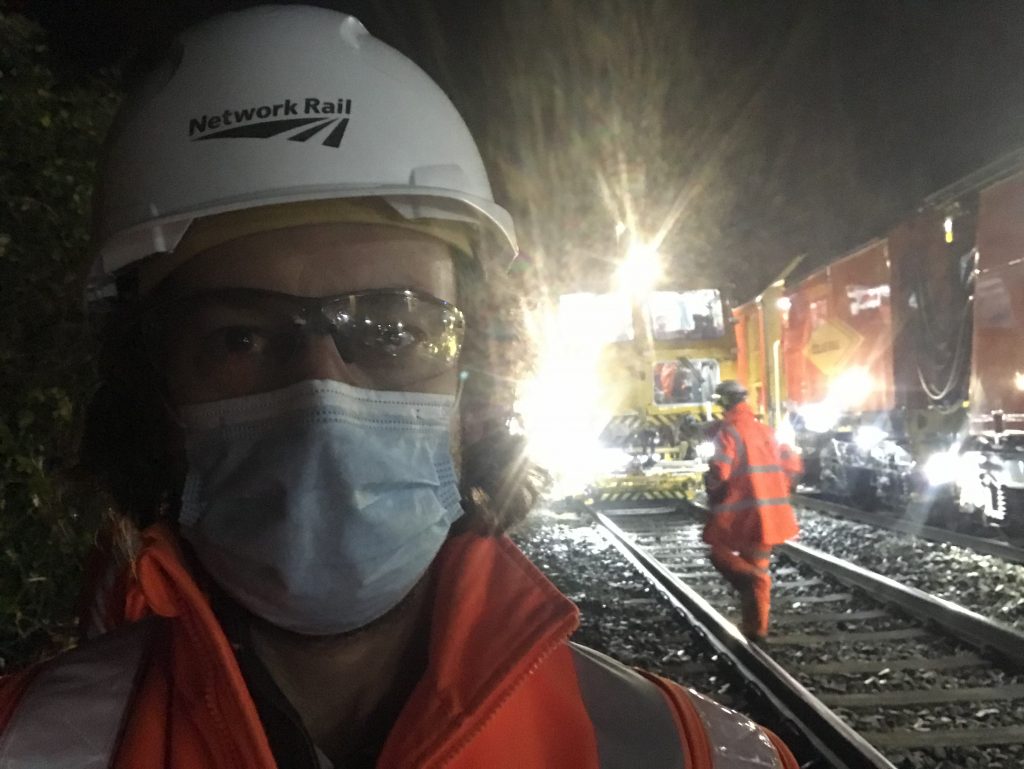
Nick joined the railway industry 30 years ago, aged 16, as an apprentice. He has undertaken a number of front line and leadership roles in maintenance, asset management, renewals and enhancements. Nick has perpetually carried on his learning journey and is currently a Chartered Civil Engineer, a Chartered Project Manager and a Fellow of the Institution of Civil Engineers. He also acts as a Supervising Engineer, and, like other people that helped him in his career, spends a good proportion of his time mentoring and developing tomorrow’s engineering leaders. Nick is currently the Leader of the Network Rail Safety Task Force.
Some of you will know me, many of you may not. I am Nick Millington and from July this year it will be my absolutely pleasure to become the President of The Permanent Way Institution, your President.
I am a career railway engineer and I have undertaken a number of frontline senior delivery roles delivering efficiency, modernisation and improvements in train service delivery at scale. My passion, however, is safety.
As an institution together, we have a huge collective intellect. We undertake roles in a number of industry organisations (design, construction, maintenance, etc) and have many more relationships with others. The focus through my presidency will be to further harness this intellect, along all of your relationships, in order to significantly multiply the awareness, effectiveness and the moral imperative to reduce safety risk across our profession. Every member has a role to play and you can all multiply the effect that you make.
Many of you will know that you do not need to be a career Safety Professional to make a positive difference. You need a keen eye for risk and then be able to apply the very simple principles of risk reduction: Eliminate, Reduce, Isolate and Control – our friend, ERIC. And we must do this in a proactive and preventative way.
It goes without saying that the ten ‘Life Saving Rules’ provide a good lens to look through when you are considering risk. For example: the risk of being struck by train, electrocution, falling from height, being crushed by machinery and more… Our Institution must strive to make continual risk reductions and it can achieve more to keep more colleagues and customers even safer.
DESIGNERS have a great opportunity – the assets that you bring to life will be around for a long time. I am sure you put yourselves in the minds of those that have to maintain and operate that infrastructure for the many years ahead, but have you really considered all the risks and done everything to create that lasting safe impact? I have recently been the Head of Maintenance for one of Network Rail’s routes and I would love to have been able to have the opportunity to travel back in time and talk to those designers that created the infrastructure. Hindsight gave me the opportunity to suggest how planned or reactive interventions could have been reduced over the assets’ life, inspections could have been done remotely, access to the railway could have been made quicker (especially isolations) and safer (physical access and walkways). And providing additional operational flexibility for train routing or electrical feed arrangements would have meant I could have undertaken more of the essential maintenance tasks without having an inbuilt conflict with operations – a natural tension that always exists.
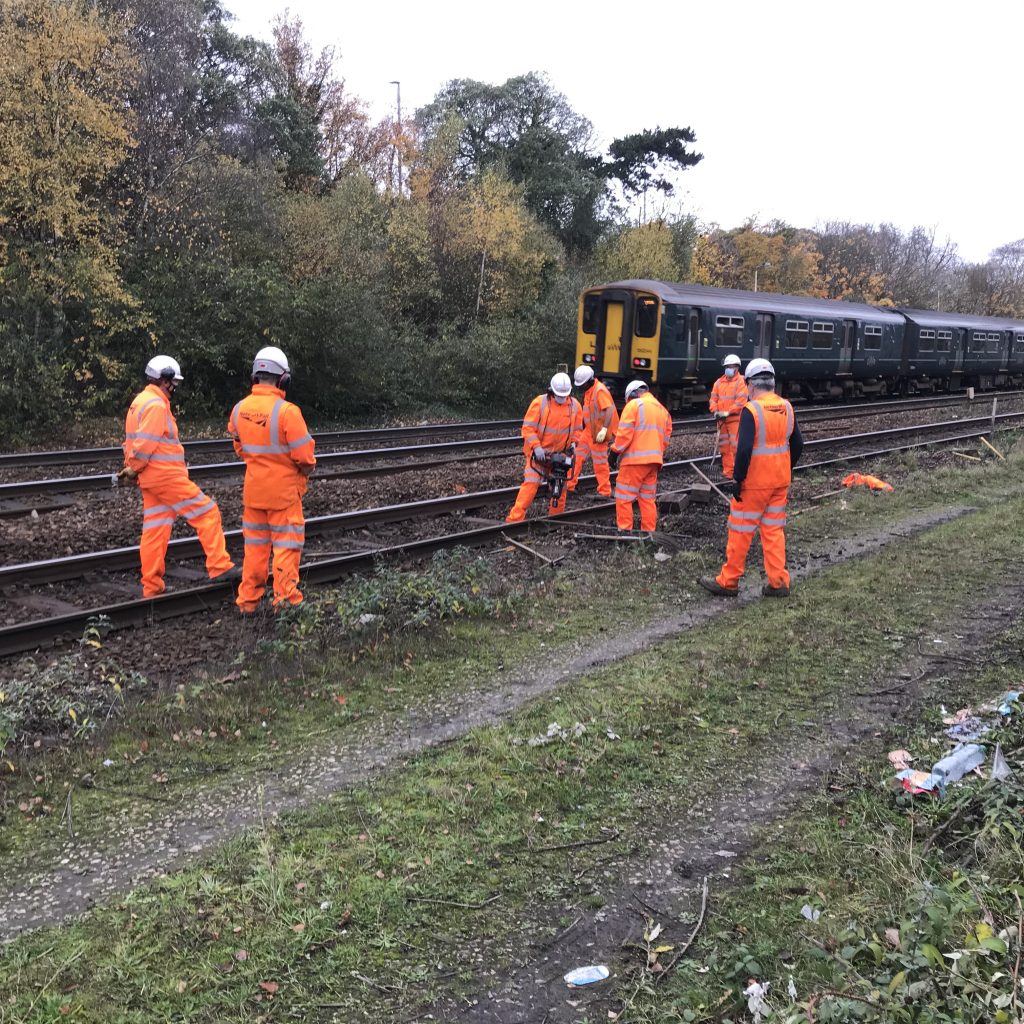
CONSTRUCTORS have made many improvements in construction safety over the last 15 years and long may this trend continue. But we still observe issues in possessions (that are often close to the open railway adjacent) and the delivery of isolations that facilitate railway construction. I recently visited a site that was trialling modern equipment to keep construction plant apart from each other and warn track staff – good to see. I am sure there is more that we can do to have injury-free construction and the PWI can help surface and deploy solutions. Again, putting my Head of Maintenance specs on, the quality of completed construction needs to be assured – front line maintenance staff can Ill afford repeat failures or unfinished snags. Another favourite of mine is site tidiness – a basic necessity. I have a fixation on sites that have been safely prepared, remain clean and tidy during construction and are completely clear of scrap and material when work have been completed, with safe lineside walkways restored. A number of very serious train incidents have occurred when small items / materials have been placed, disingenuously, on running lines – google West Ealing 1989 derailment, or Inverkeilor 2012 derailment, and it will show you where, as an industry, we were very lucky indeed.
MAINTAINERS keep our railway compliant and operational, perpetually. But how do we more progressively challenge and disrupt familiarity and the complacency that sometimes follows? I have been guilty of this myself: a healthy relationship with risk can fade through repeated exposure, but we must not slip. Maintainers see the railway every day, you know the risks that you inherently have to deal with so please generate a much more vocal ‘ask’ on what can be done to eliminate or reduce the risks that you perpetually deal with. Use the Institution as a platform to lobby designers, constructors, innovators and leaders for improvements – and those designers, constructors and innovators please listen; put your thinking caps on and act.
INNOVATORS, and we have many, what solutions can you bring to the table now? In my 30 years in the industry, I have seen radical changes, as I am sure you all have. I have seen solutions to problems that we didn’t even know we had! When you consider the risks that I refer to above, what more can we do to harness technology, complex or simple, to reduce risk? How can we reduce hours on track? How can we ensure separation between people, trains, plant and high voltage electricity? How can we remotely monitor more assets and in more ways? How can we further use machine learning and artificial intelligence to create more effective designs, improve the science of asset management and, ultimately, provide a perpetually safer and more reliable railway for track staff and customers alike?
LEADERS, and we are all leaders in this space, consider the shadow that you cast, the habits you and your teams have and the proportion of time you spend focussing on the ‘right’ things – is safety leadership a prominent theme amongst these things? What more can you do, as leaders, to further energise and enable your teams to have a keener eye for safety risk, have more confidence to challenge and show more determination to take active steps to reduce safety risk? Every one of us can multiply our effectiveness through the examples that we set and through enabling other leaders, managers, supervisors and team members to be safety leaders in their own right. On multiple occasions, I have observed and overseen journeys in organisations from ‘safety frustration’ to ‘the safest performance’. In the examples I have in my mind, financial performance, environmental performance and delivery performance all improved simultaneously.
Strong businesses are safe businesses and safe businesses do not happen through luck. It takes a greater focus, relentless effort and the ability to multiply the safety habits of an organisation, but it is rewarding, and it is worth it. To be successful in the rail industry, it is not enough to be just a ‘good engineer’, financial efficiency, environmental performance and continually improving a strong safety culture are essential attributes. These challenges are real, and they are raw – as I sit and write this article:
We are an industry with virtually no revenue (due to Covid), our trains are empty and we are locked down; We have to rise to the challenge of decarbonisation quickly (the railway line along the Dawlish sea wall is shut whilst I am typing this message due to sea conditions); And, sadly, a 30-year-old railway patroller has been struck and killed whilst inspecting an S&C layout on Tuesday of this week whilst working on an open railway with unassisted lookout warnings. In a little over 2 years, 5 colleagues have been struck by trains and killed working on our railway.
I look forward to leading the Permanent Way Institution, creating a stronger platform to debate these issues, enabling progressive challenge amongst each other in the industry and more importantly, driving, amongst other things, the safety agenda harder. I also look forward to continuing the good work of the Institution on upskilling and creating professional development pathways for more of our people. Learning and creating the strongest safety habits is the most powerful legacy we can all leave behind.