

UK Rail Industry – What sort of place for a career?
Sometimes, contemplating the UK railway industry can be a painful experience! Industrial relations problems; massive increases in the cost of major projects (with the consequent risk of scope reduction); impending funding issues in Control Period 7 (CP7); diabolical service performance from some passenger franchises; the challenges of adapting infrastructure and working arrangements to cope with climate change, and with an associated increase in severe weather events; a national government that appears to be largely ignoring rail’s potential in its thinking on decarbonising transport; and continuing uncertainty over the timing and nature of industry restructuring and re-organisation, have conspired to create something of a gloomy atmosphere around the industry. Why on earth work in rail? But there are positives!
Enthusiasm, Ideas and innovation
During a quick look around the exhibitor stands at the recent Rail Live (on a short break from PWI stand duties), I was bowled over by the sheer energy, commitment, innovation, and delivery record displayed by the many exhibiting companies and their teams: surely some of the best reasons to join the railway infrastructure. During a quick look around the exhibitor stands at the recent Rail
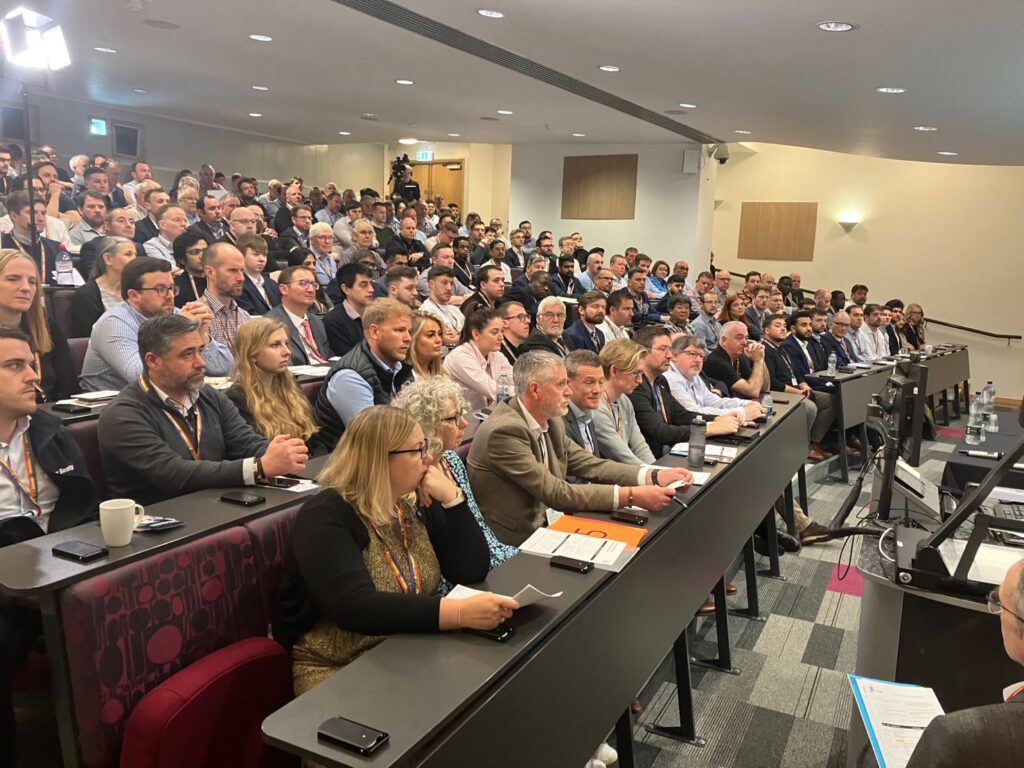
Live (on a short break from PWI stand duties), I was bowled over by the sheer energy, commitment, innovation, and delivery record displayed by the many exhibiting companies and their teams: surely some of the best reasons to join the railway infrastructure engineering industry. The PWI’s April Electrification seminar in Sheffield showed how our industry is actively preparing for an electrified future and provided more evidence as to why railway infrastructure engineering will be an exciting and interesting place to work for decades to come. The biannual Railway Engineering Conference held at the Royal Society of Edinburgh in mid-June showcased the huge amount of rail-related work – and thought – being applied
in responding to climate change now and in understanding future changes, their potential impact, and potential mitigations. The conference was a set-piece demonstration of how academic researchers, practising engineers and technicians, climatologists, economists, and those from other disciplines
can harness their efforts to make a real difference now, up to 2050, and beyond. A truly exciting time to be involved in this industry and a further reason to join it.
A career in rail
From the discussion above, it is clear there’s much to do in our industry, but the medium-term future does look positive. Integration, reorganisation, new technology, and process improvement mean that there are (and will continue to be) many areas in which individuals can make a real positive difference: perhaps the most satisfying aspect of any role. So, to anyone contemplating a job or career in the railway infrastructure industry, I’d say six things:
1. Yes, go for it!
2. You’ll never be bored, and the tasks you take on will be worthwhile
3. There’ll always be another fascinating challenge to follow the one you’re addressing now
4. Lifelong learning will remain essential
5. You’ll meet great people who will support you
6. The PWI will be there to help you at every step!
PWI Strategic update consultation – member feedback
A big thank you to the 150 or so members who contributed directly to our consultation on the PWI’s future and to others who engaged less formally through informal discussion. Your responses
provide a valuable window into membership thinking: a rich and varied mix of information, ideas, and
opinions of enormous help in identifying and taking forward the PWI’s strategic priorities.
Once the consultation closed in early April, responses were distilled into some 325 comments, each referenced against the 28 consultation questions. This enabled patterns and trends to be identified. It is interesting to note that many of the ideas and opinions have been the subject of Board discussions, and several of the actions suggested in the feedback are already underway, albeit in the early stages and not yet well-publicised.
What did members say?
Some common themes emerged across the different feedback topics, particularly a need to improve member communication and make better use of the website, to collaborate with other PEIs and industry bodies, and to focus on engineering at the railway system level and at discipline and asset interfaces. Looking at the five specific consultation themes, I’ve summarised some of the notable comments below.
Theme 1 – Vision, Mission, and Image
- The PWI’s vision and mission should increase its focus on people and be accompanied by a clear statement of values emphasising professionalism.
- The PWI should drive challenge, innovation, and change, championing efficiency and value for money, and work to increase knowledge as well as share it.
Theme 2 – PWI and Wider Society
- The PWI should place a stronger focus on ethics and professional standards and on social values.
- PWI should provide more feedback to members on the PWI’s engagement with the wider engineering establishment, including its work with the Royal Academy of Engineering and Engineering UK.
Theme 3 – PWI and the World of Railway Engineering
- The feedback gave overwhelming support for finding and developing international opportunities for membership growth and for the PWI’s education and training activities, collaborating with corporate members where appropriate.
- The PWI should consider setting up communities of technical interest and/or undertaking issue-specific “deep dives”.
Next Steps
The Board considered the detailed consultation feedback during its workshop day in May. The output from that event is now being worked into a more comprehensive five-year-plus strategy, setting out intended strategic outcomes, priorities for strategic development and change, and an overview of consequent tasks and timescales. That strategy will be presented to Board at its July meeting.
Presuming a positive outcome from the discussions in July, further work in later summer and autumn should see detailed plans and draft budgets put to the Board at its November meeting. So, expect a further update from me in the January ’24 Journal…
In the meantime, I wish you all a splendid summer and trust you enjoy your holidays!