
SWITCHES & CROSSINGS IN 2021
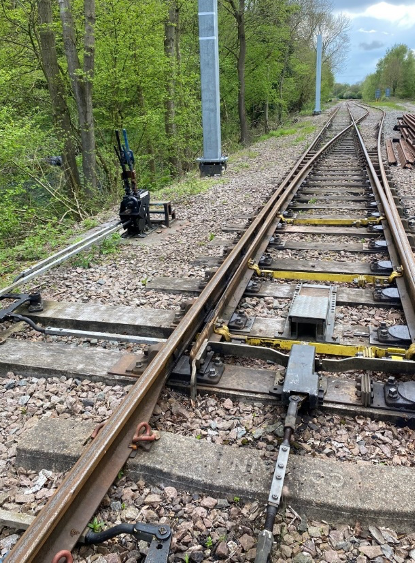
Our next PWI theme is S&C and this is becoming a major focus for the PWI. We are encouraging members to write articles and get involved in expanding our knowledge base in this important area.
See here for the PWI S&C Refurbishment courses which are becoming extremely popular for all companies, and we are now doing bespoke courses for Network Rail and TfL at locations to suit the participants.
As I mentioned in the April Journal, it is a challenge for engineers to fully understand degradation of S&C layouts, especially when considering the changes that have occurred since layouts and components were designed to cater for the loadings and stresses around 20-40 years ago.
The classic rail engineering concept is the knowledge and understanding of the wheel rail interface.
PWI training does not stand still, and we are continuously improving our knowledge through research based on a theoretical and practical experiential approach.
We need to know more about how modern vehicles approach S&C and travel through the obvious discontinuities associated with switches and crossings, as this is a major subject of debate.
The fragmentation of the industry post 1990s privatisation involved splitting the wheel and rail technology between stakeholders. It has not always allowed us a full and comprehensive understanding of new rolling stock, some of which have varied sprung and unsprung masses. I have had some interesting discussions with experts who indicate that they are especially concerned about some modern vehicles which exert forces in all directions which may be somewhat different from what was expected. We need to work together as an industry to prevent derailments. I am excited about being able to offer more courses in S&C.
REFLECTION
As I mentioned in April, the Institution was only operating virtually as we went to press. We have really enjoyed meeting online and had some great meetings and another superb Network Rail Track Maintenance Engineers’ Conference with excellent speakers and new insights.
I have good contacts in USA at the University of Illinois, and it was great to hear from William Rothery regarding rail stresses. Also, some of us still worry about long timbers; well done to John Nelson for leading the network Rail working group.
I have to say that the opportunity to speak online at very short notice has given us a unique edge on the ability to conduct business, formulate decisions and make progress. So, it’s not just doom and gloom, its Zoom!
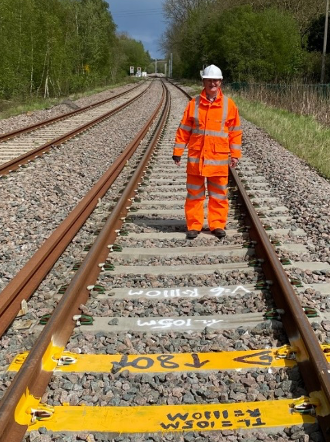
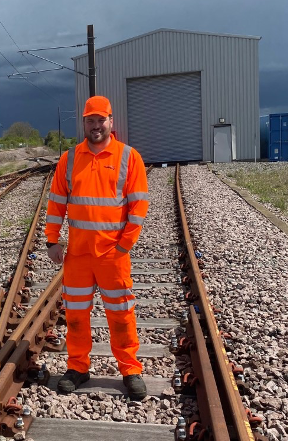
What a change in early May, though. I have been on site in my PPE (images 2&3) at High Marnam, taught face to face at the Derby Conference Centre and Derby University on railway courses and even had mask wearing train trips to London, Worthing and Sheffield.
It is only when experiencing our vastly improved railway that we appreciate the advantages of rail. I was particularly excited by my first proper visit to London Bridge with its amazing concourse and superb track layout. I remember the PWI Section meeting I attended some years ago where the complexity was shown of opening up the underneath. Having remembered the old bleak, dark and dirty platforms, it made me immensely proud of the new station with impressive views of my favourite skyscraper, the Shard. Please go and see what we can do; this station is far better than many in Europe and the rest of the world.
The icing on the cake for me in May was a restaurant meal and a drink with railway colleagues. As we return to normal, our plan for autumn seminars is extensive, so I hope to see many of you in Manchester and Swindon.
We cannot help but anticipate some very positive changes with the long-awaited Williams-Shapps review. A vertically integrated railway will optimise the point that I am always harping on about – apart from the obvious performance benefits to the customer, it is the systems approach throughout and for us in permanent way the wheel-rail and train-wire interfaces.
RESILIENCE OF RAILWAYS & CLIMATE CHANGE
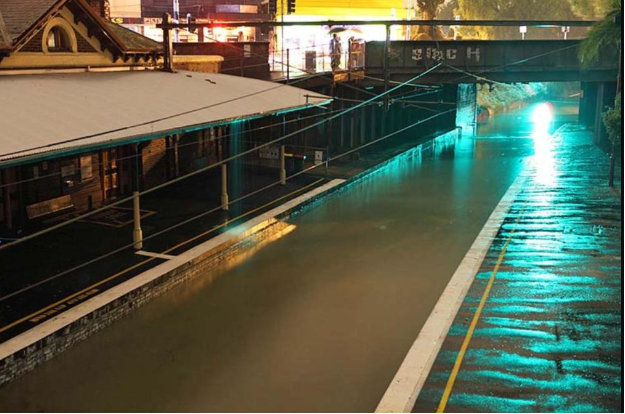
The spring is over and we have had our share of weather surprises with the usual weather records being smashed, the wettest May in Wales since records began!
However, on PWI training we talk about how we should continue to monitor our railway neighbours and the surrounding areas to make the railway more resilient, and think big!
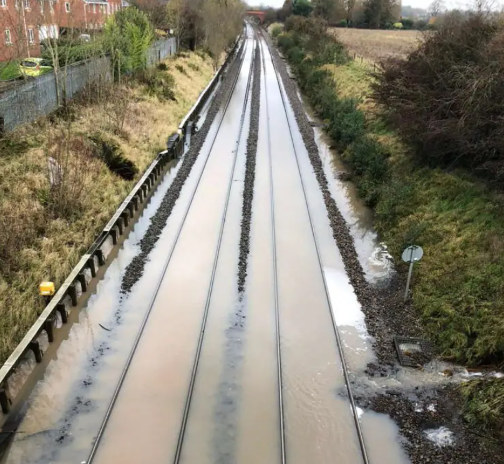
Image 4 shows Draycott, south of Derby, on the Midland Main Line. Although a drainage ditch was installed in 1999 to help prevent flooding on the railway, it has still been flooded 19 times in the last 8 years. Why? If we look at when the adjacent canal was infilled in the 1960s, we see the problem. With a reinstated canal, would the problem go away? A joint venture has been worked out between Network Rail and the Canal Trust worth £450,000 that will significantly reduce flooding and create new recreational facilities. A win-win!
Finally…Guess the location! (Image 5)