
We are well into 2024 and having had 140 years of providing this service as the Permanent Way Institution, we are ready to take up the challenge of giving a wider and more railway systems approach and expanding our technical and people support going forward. The ambitious plan is to qualify and register 140 Railway Engineers before we reach 2025 and this initiative is well on plan.
We have over 1000 people who have shown an interest in developing professional qualifications and these range from students and apprentices to older experienced people working in a wide range of businesses and railway disciplines.
We started the year with 771 student and apprentice members and I predict that this will easily become 1000 by the end of the year! We are currently enrolling all the degree apprentices on the BEng Railway Engineering courses at Sheffield Hallam and London South Bank Universities to supplement the new starters on the level 3 rail apprentices programmes at Network Rail, TfL and other companies mentioned in the last Journal.
In this article I will talk about safety, people, technical quality and research.
TECHNICAL AND SAFETY
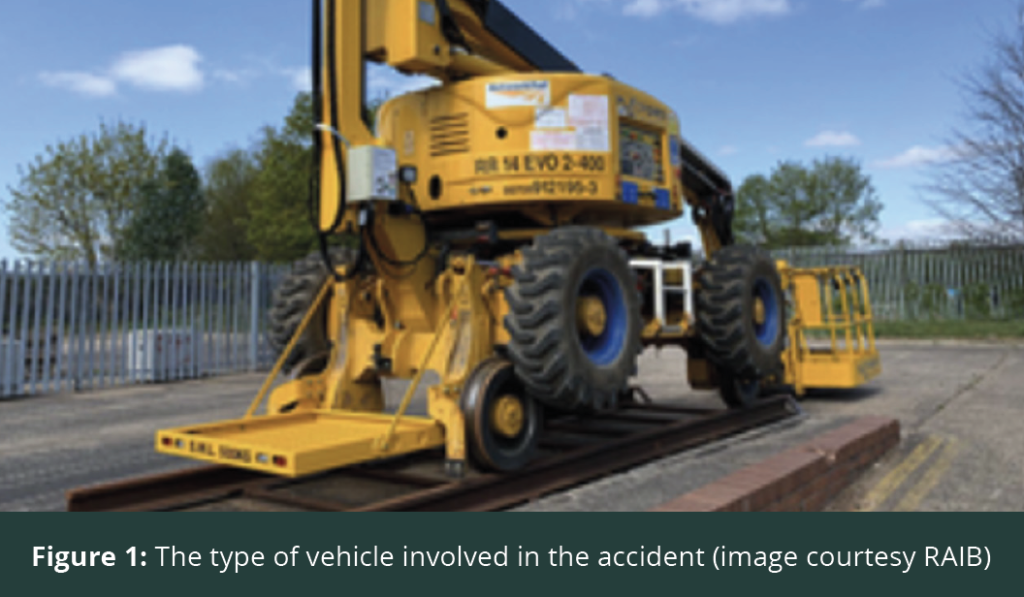
The Institution’s team are fully committed to supporting safety in the railway industry and this applies equally to the system itself and the staff. It is sad to hear that there was a serious injury this year where a worker was struck by a road rail vehicle. When I was working on the WCML in 2005, we had a number of fatalities involving moving plant and this incident reminds us that moving plant remains one of the major hazards in railway work. RAIB reports that during the early morning of 6 February 2024, a track worker was struck and injured by a road-rail vehicle (RRV) while working in a possession on the Midland Main Line near to Braybrooke in Northamptonshire. Thankfully, this was not a fatal accident.
As mentioned, staff safety is critical but so is the ability to properly inspect the track. There have been a number of technical ‘near misses’ where track condition has deteriorated unexpectedly. We are a victim of our own success with a major increase in trains, but we must have proper access, in my view in daylight, as cracks can be hidden at night! Last week, we were educating some fairly new track technicians on our new Advanced Track Technician course and emphasised that if something does not look right to put a speed restriction on and seek advice urgently.
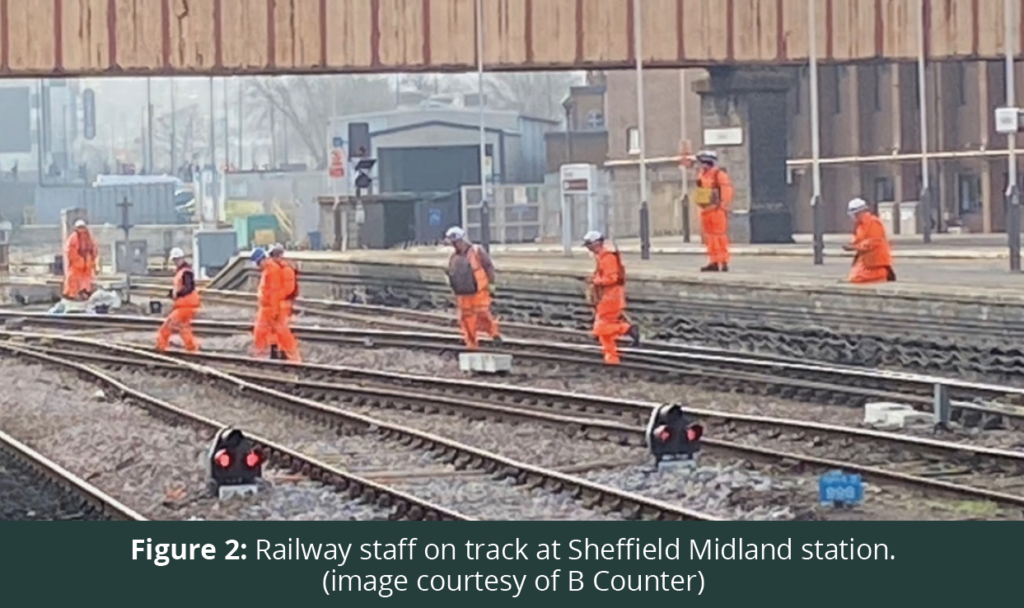
In today’s challenging railway, it is great to see improvements in action and credit must go to the Network Rail team in Sheffield. I witnessed a safe system of work for inspecting and maintaining station trackwork using up to date technology. Please note below this work is in daylight at 10.00 am!
The safe systems being utilised is LOWS and is clearly an upgrade on the flag lookout system and is approved at Sheffield but they are looking to upgrade whist retaining daylight inspections in busy areas.
PEOPLE
We have been making a difference ever since we launched our 2024 campaign. The PWI Past Presidents and the PWI Board are behind us in making a name change to modernise and consolidate our position in the railway industry UK and worldwide. The campaign is not only about people joining but becoming registered and it is good to hear than many employers see it as a progressive approach, so the majority can be EngTech and working towards Incorporated or Chartered Engineer status. This links with our education and training provision and it is always a great pleasure for us to make the award of the prestigious PWI Track Engineering Diploma.
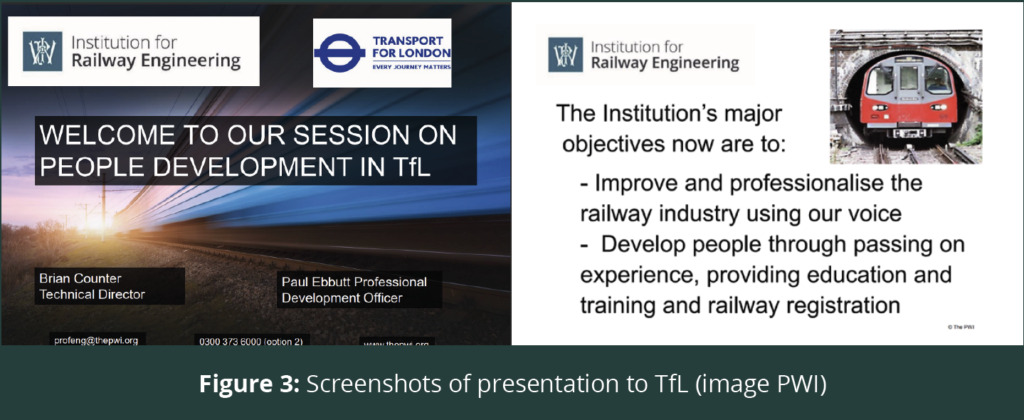
I was very pleased to meet the infrastructure management team at Transport for London (TfL) in early March. Paul Ebbutt and I presented our mission for developing people from an education, training and Professional Registration point of view. It was interesting to listen to the challenges of the London Underground Railway, not only regarding how they recruit and retain people but in solving and sharing technical problems.
Hopefully, a lot more TfL staff will join the Institution and realise the benefits!
“THE TRACK ENGINEERING DIPLOMA WAS AN ENJOYABLE EXPERIENCE FROM START TO FINISH.
All the speakers were vastly knowledgeable and engaging. Already I feel the benefit in my career, the course has given me a greater understanding of Rail as a system and how all the different disciplines interface. I have no doubt the knowledge and experience gained will help my career long into the future. I found it very useful to learn about other systems and maintenance to better develop my designs, now making sure that the designs are done with maintenance in mind and the interfaces with other systems. I would definitely recommend taking this course to anyone within the Rail/Track sector.”

TECHNICAL QUALITY AND VALUE
Yet again, we are seeing our passionate railway engineering teams seeking to make a lasting difference by doing quality jobs in track life extension and refurbishment. We, at the Institution, are looking for examples where we can pass on best practice to others particularly through our training courses. The best examples come from meeting others and sharing solutions, we call this professionalism!
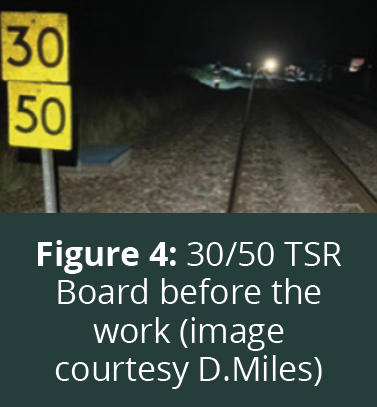
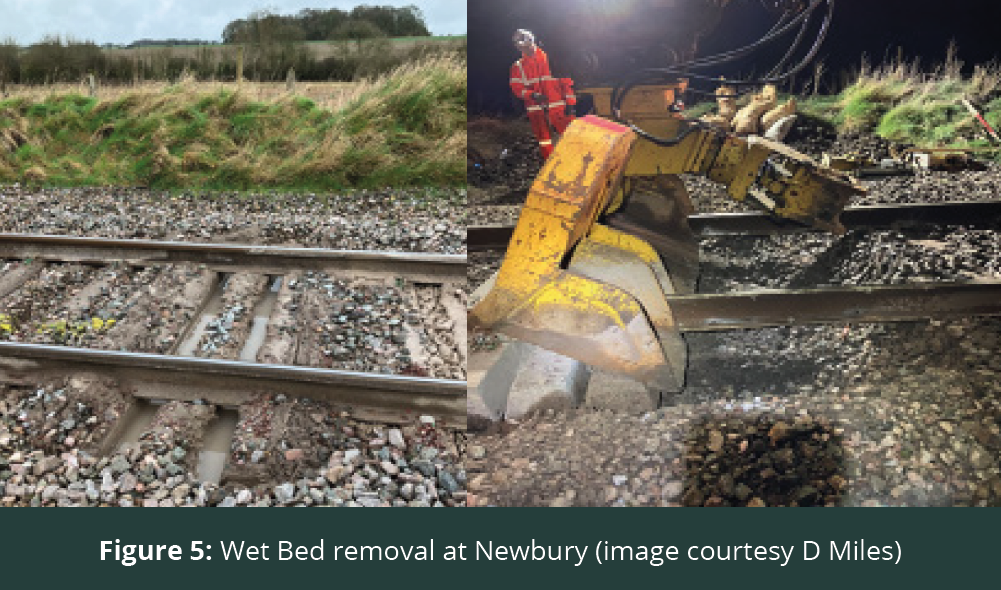
My first example is given to us by Daniel Miles MSc CEng MPWI who is a TME on Network Rail Western. He posted on Linkedin that he is proud of the work done by his team at Newbury which I would call ‘production line’ removal of wet beds with machine utilisation and 60 tonnes of ballast replaced and the removal of a tricky speed restriction.
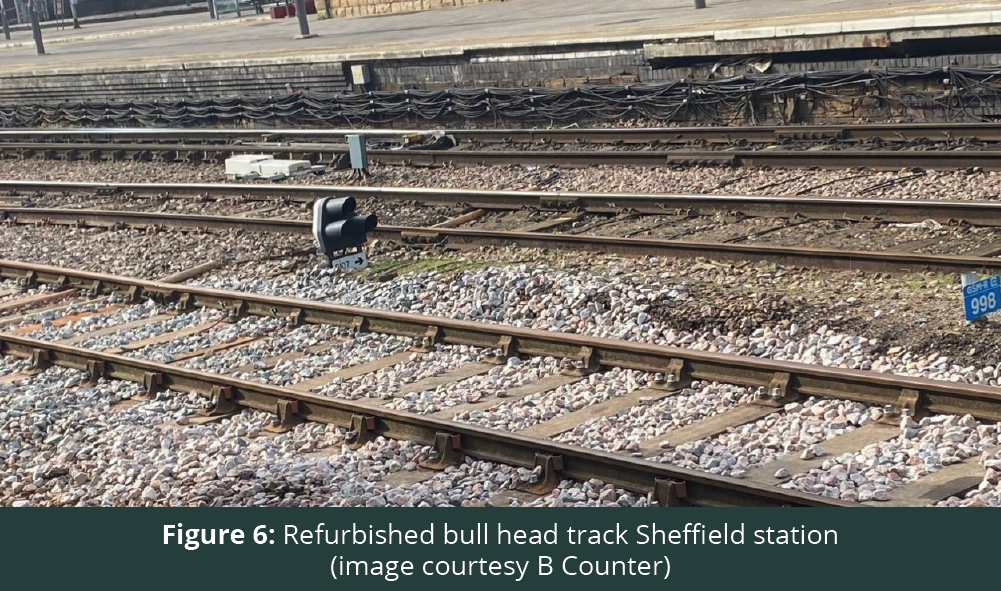
Secondly, again, Sheffield Station, an example of quality refurbishment of bull-head track and this is in the public view. After the problems of defective track causing a freight derailment a couple of years ago it is good to report improvements. I should know, having looked after this area for 5 challenging years, it is not easy to manage degradation and it is a credit to Perry Franklin, the TME and his team, who, by the way, are on the Track Engineering Diploma and working towards registration. Perry said, “The upgrade works at Sheffield are still underway where currently we’ve changed sleepers and ballast and will be changing chairs and upgrading rail to CEN54 and will be completed early next year.”
AND FINALLY…
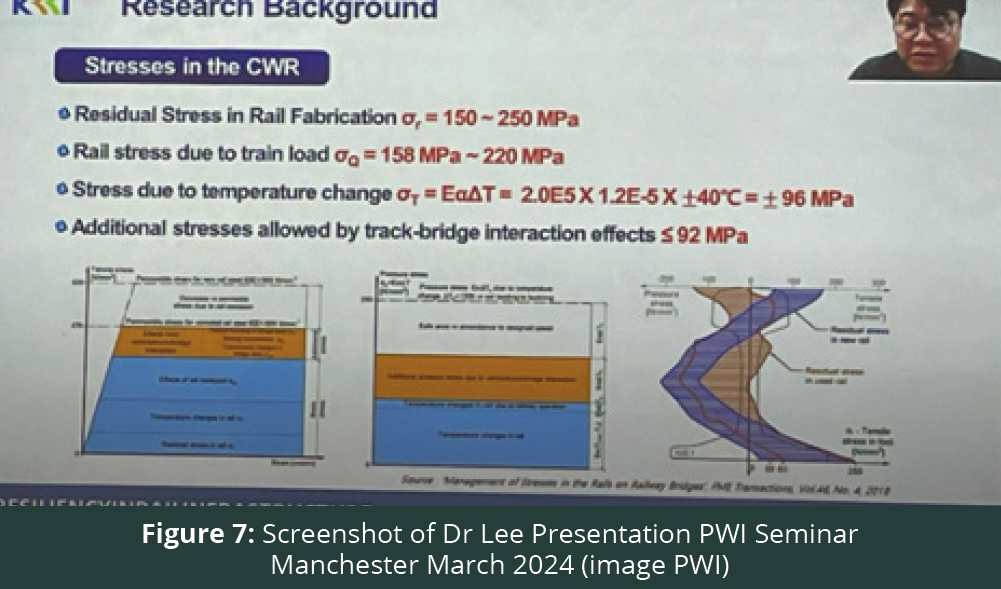
To be a qualified UK railway professional we need to understand the United Nations Sustainability Goals and climate change resilience plays a major part in this area. It was delightful to see so many members and potential members of all ages attend our seminar on 7th March in Manchester. Not only did we look at strategy but practical applications to manage things such as heat. Last year, I was pleased to meet Dr. Changgil Lee from the Korean Railway Research Institute at the Edinburgh Railway Engineering Conference. At Manchester, he was able to further update us on his work on ultrasonic wave propagation measurement for ascertaining stress free temperature in CWR. The session with him (online) and Brian Whitney from Network Rail was fascinating and offers great potential.
This is the finest form of CPD and we will continue to work internationally to make further advances with our colleagues in research areas.