
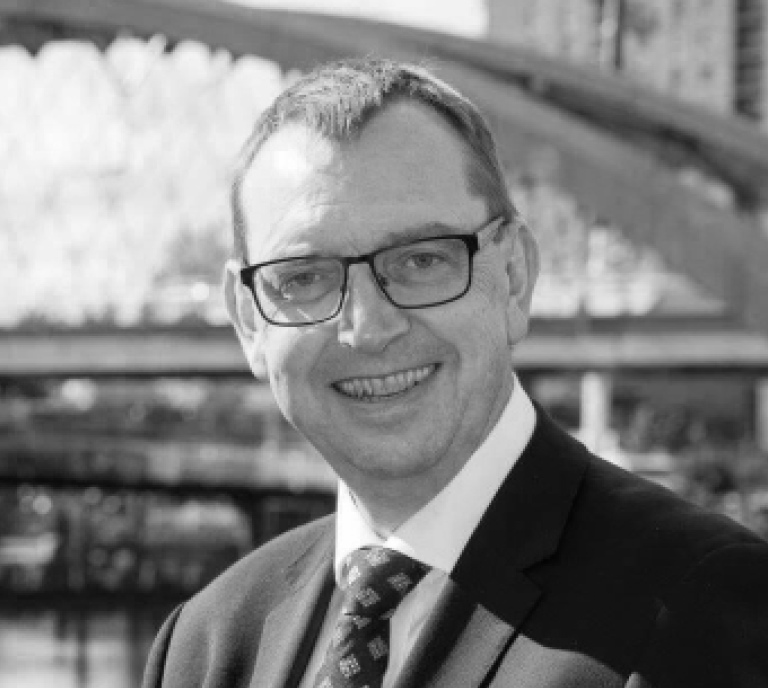
To celebrate PWI Past President Steve Featherstone’s joining the Fellowship of the Royal Academy of Engineering, Rail Degree Apprentice and PWI Ambassador Daoud Hamdani sat down with him to chat about his career, Fellowship, tenure as PWI President, and more.
THANKS A MILLION FOR MAKING THE TIME TO TALK STEVE.
YOU STARTED IN THE GAS INDUSTRY; WHY THE SHIFT TO RAIL, AND HOW DID THE FORMER PREPARE YOU FOR THE LATTER?
My rail career began with the fatal 92mph Virgin Pendolino derailment at Lambrigg in Cumbria in February 2007, where insufficient inspection and maintenance led to tragic consequences. A head-hunter rang me and asked if I’d considered working in rail – and my honest answer was no, I hadn’t.
I’d wanted to be an engineer since I was five years old, and I’d never thought about the railways as a career. I reflect on that a lot and think ‘why?’ – because once you’re in it is a fantastic, fantastic place to work.
Both gas and rail are linear, safety critical assets which need to be highly reliable, high quality, and basically running 24/7. So, I came in as an engineer with safety critical experience from a non-railway background and with a fresh pair of eyes to challenge where we were, why this was, and what we were going to do about it.
HOW HAS WORKING IN RAIL SHAPED YOU AS A PERSON AND VICE VERSA?
I found a whole new language to learn in rail – crikey do we love our acronyms! I used to get a rail engineering problem, convert it to a gas problem, solve it as a gas problem, then reconvert into a rail solution. Progressively I became a railway engineer, but it was a long journey.
I intentionally surrounded myself with veteran railway engineers of 35+ years’ experience, and I passionately believe in developing talent and promoting from within when filling senior roles – despite my own origins from outside the industry. As Maintenance Director and later Track Director – areas previously perceived as being potentially limiting for a career – to attract great staff I backed youth; promoting from within hugely talented, highly motivated people into positions early before their talents were fully recognised by others.
WERE THERE ANY LESSONS AS A RAIL ENGINEER YOU LEARNED THE HARD WAY?
When I joined Track, I think we had 11 serious overruns in the first twelve weeks of when I was in charge. When I left, it had been 2.5yrs since we had a serious overrun. We took every failure as a chance to learn, drilling into further detail each time. The most common reason for overrun was plant breaking down, which had a knock-on effect. As Maintenance Director, my commercial team had put in place the plant contracts, reducing costs by 8%. Only some years later did I realise we had sent the message that we wanted cheap plant – but what we needed to achieve our goals was reliable plant. With the benefit of hindsight, I’d rather have paid extra for reliable machines. Seeking solutions, we set up the Rail Plant Performance System which still exists today. Initially, the average plant reliability was around 96% with a 4% breakage rate per shift. We implemented a wholly data-driven policy for plant hire based on each machine’s proven reliability, developed the culture of “share with pride; copy with pride; share with pain”, and rewarded best performers with certificates of achievement through our ‘Route to Gold’ scheme.
Suppliers were motivated to improve control systems, ensuring waterproofing and eventually upgrading to the solid-state electronics we’re familiar with today. Maintenance and renewal intervals for key components such as batteries and alternators were also improved, and out of these battle scars over the years national fleet reliability improved to an average of approx. 99.5%.
WHAT’S YOUR PROUDEST RAIL ENGINEERING ACHIEVEMENT?
The high-speed hand back programme. I challenged my team to hand back everything we did at up to 125mph. Doing this on plain line was rediscovering what our predecessors had done before 30 years ago using DTS – once this was done, we embarked upon doing this for brand-new S&C, which had never been done before. First on trailing points as this posed the least risk, and then on facing points.
We spent three years studying the science. We had universities helping us. Ultimately it was my signature on the page which authorised us to do this. We developed Progressive Assurance to ensure that each shift’s works had been done to the appropriate standard, ensuring every critical task had been signed off as suitable for 125mph. I was hugely proud of the team for achieving that.
WHAT ARE YOUR THOUGHTS REGARDING THE FUTURE OF RAIL ENGINEERING?
We’ve got to look at women in engineering. Thirty-five years ago, when I graduated, approximately 10-15% of engineering graduates were female, and we were doing lots of things to improve that. 35 years later, not enough progress has been made and many of the initiatives now are the same as those of years ago. There is no reason for gender imbalance amongst engineering students and practicing professional engineers. We need to challenge ourselves, and not be afraid to pose new and radical solutions.
I’m also looking forwards to influencing how we get more people to study engineering. Lots of people who are very capable of doing engineering are diverted into studying for other careers, and we need to get across the message that it is great to be an engineer – particularly a professional engineer. It’s also not widely understood the earning potential of professional engineers either – we need to be bold in our message to students and parents about how well-paid engineers are, and I’d like to see research done into the earning potential of professional engineers to help us make this case.
WHAT NOTABLE DEVELOPMENTS DID YOU OVERSEE AS PWI PRESIDENT?
Whilst President, we changed to incorporate one-year presidential terms and a four-year cycle, where we try to have Network Rail, London Underground, designers, and contractors represented in the presidential chain – maximising inclusivity and exposure to the widest array of industry talent.
Borne out of financial necessity and my own experiences as President of the Institution of Gas Engineers, I knocked on the doors of our supply chain and thus started the corporate members’ section – which has gone on to support initiatives like the Trackwork Challenge, STEM outreach, and the Young Engineers Section. Blunt marketing, I admit; but it worked!
Pleasingly, even since I moved on, most of the companies have remained as Corporate Members and the PWI continues to sign new companies too. It’s a great section and they contribute a lot – all of which is invested back into member services. The job that Joan Heery does in making them feel valued, welcomed, and aware of what they are getting from their support is invaluable.
WHAT CHANGES HAVE YOU SEEN SINCE YOUR PRESIDENCY ENDED? DO YOU HAVE ANY THOUGHTS ON THE DIRECTION OF TRAVEL OF THE PWI, PARTICULARLY REGARDING ELECTRIFICATION ENGINEERING?
Two main changes – one was we were going through the process of becoming a registered body of the Engineering Council; the final confirmation of which came through just after I stepped down. So having spent a good deal of time navigating this path, I think Stephen Barber got the glory just as we came over the line!
We had a long debate about whether to be a home for electrification engineers and concluded we should embrace OLE. It’s fantastic that Peter Dearman, whose background is in electrification engineering, is now President – we’re privileged to have him, and it sends a clear message to the electrification community that the PWI is a good place for them; one where they can complete their professional journey. At the recent awards ceremony, I genuinely had a tear in my eye when Peter presented the electrification diploma certificates – just thinking about the journey that we’ve been on; and it really feels now like we are somewhere that electrification engineers can feel at home.
WHAT IS THE ROYAL ACADEMY OF ENGINEERING, AND WHAT GOT YOU STARTED ON THE JOURNEY TO FELLOWSHIP?
The RAE (Royal Academy of Engineering) was set up in 1976, as the government of the day needed somewhere to go to for advice on engineering matters. So, the RAE brought together Chief Execs, Chief Engineers, & academics for this purpose. When we became a registered body with the Engineering Council and able to register CEngs, IEngs, & EngTechs; one of the things in the small print was that the President could nominate people for Fellowship of the RAE – which Joan Heery did for me during her time as PWI President, and I’m hugely grateful to her.
HOW HAS THE PWI PREPARED YOU FOR YOUR TIME WITH THE ROYAL ACADEMY?
One of the challenges I’ve set myself and which I’ll work closely with the PWI to address, is that it is only existing Fellows of the Royal Academy and Presidents of the professional bodies that can nominate people for election. I know some fantastic engineers in the railway industry who aren’t Fellows of the Royal Academy, but that really should be. So, one thing I want to do is to use my vote and whoever is President can use their vote to try and get more railway engineers recognised and part of the Royal Academy, so that we can provide input to policy panels as required.
ANY FINAL THOUGHTS?
I’ve learned a lot through working with the professional bodies and the PWI, and I’ll carry that forward into the Royal Academy. I’m looking forwards to joining a panel on energy or transport as that is my experience. It’s all done on a voluntary basis, its’ very early days, and I’m just looking forward to contributing as much as I can. I don’t really know what they want me to do immediately; but whatever it is I’ll throw my heart and soul into it and do what I can to help.