(Article from Journal 2022/01 Vol140 Pt1)
SWITCHES & CROSSINGS IN 2021
At the end of 2021 and going forward into 2022, it is a time to reflect upon a year which despite Covid-19, lockdowns and restricted face-to-face interaction we have not only continued to learn but in many cases done more. This is especially the case in all the technical areas that the PWI is known for, and I would again like to focus on S&C.
The greatest opportunity to learn is by attending seminars and meetings, engaging in formal training and education, and reading publications such as the Journal and industry reports. I have reported a lot about the contribution that PWI training is making towards competency, which I am confident will improve the delivery of safety and quality in rail infrastructure engineering, especially in S&C.
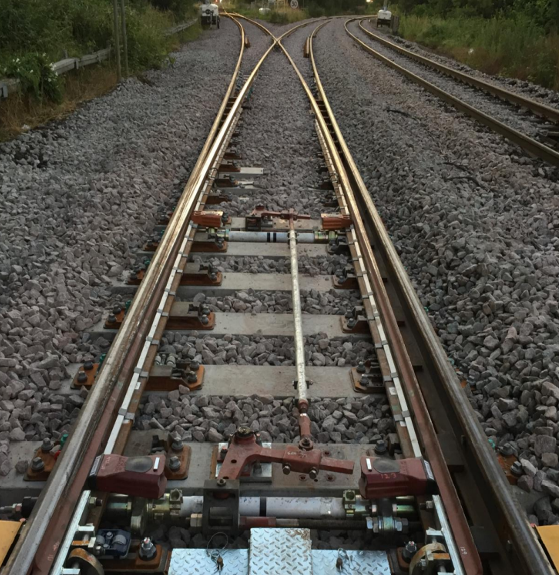
Let’s talk about the future. It was a brilliant day in Manchester in October at the NW seminar, which having been put back twice, went ahead as almost a carbon copy of March 2020, obviously with different presentations – it really felt like we were back. Andrew Turner and Matt Crompton gave an excellent update on NR60 MkII and High Speed S&C developments. Fifty of these have been installed and the picture below shows a contraflexure turnout. It’s good to see the technical analysis and research that goes into these developments and underpins the design criteria relating to forces in three dimensions and stresses relating to different types of rolling stock. On PWI training, we always generally discuss changes in traffic patterns when a layout is 25 years old. It’s fascinating to track these changes over time as the railway is always changing as passenger and freight patterns develop – what will be the impact of HS2 and decarbonisation on this aspect in the future?
This brings me around to the old. When we are servicing, maintaining and refurbishing S&C, we have to deal with the output of many changes and it is very challenging to economically maintain ageing layouts, some of which are over 40 years old.
The old pway engineers used to call this knowledge the “black art” – those things that an experienced supervisor or engineer would look out for and correct. We are now more sophisticated and use derailment risk assessments and track quality data which is an excellent way of providing consistency of approach.
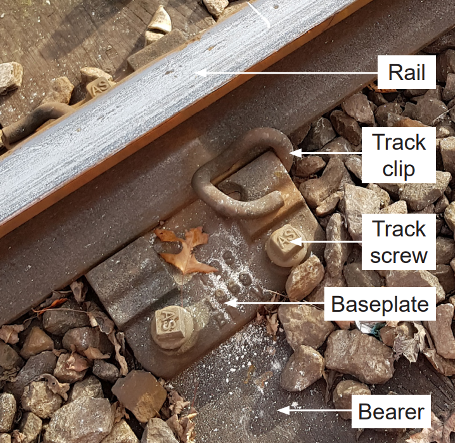
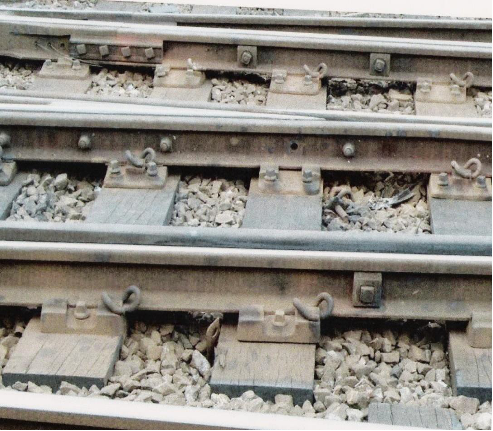
The following pictures show some old track which is challenging to maintain, and some defects, many of which require a high level of potentially complicated intervention.
There is nothing new about these problems. What is possibly new is the limited knowledge and experience of the people to interpret the tell-tale signs and an incomplete understanding of risk combined with potentially limited access.
The recent RAIB report of the Sheffield derailment on 11 November 2020 indicated that the track gauge had widened because several track screws, that secured the rails and baseplates to the wooden bearers, had broken, allowing the rails to spread apart under the loads from passing trains. I recall a similar derailment at Nottingham in 1997, where it was obvious afterwards that many screws had sheared possibly some time before the derailment, and it was left to just a few screws to carry the horizontal load from a heavy freight train. These challenges continue and I do remember that often it is not easy to see the signs of these which are usually pre-empted by a potential shuffle mark.
The contribution of tightly curved track, possible speeds at the higher end of the range and insufficient track quality data is noted by the RAIB, who always do not apportion blame but look to how we, as an industry, can improve.
The PWI will continue to share knowledge of S&C incidents and publish lessons learnt alongside our training. The old adage that “engineering is not an exact science” comes to mind and every situation is different in track maintenance. Look out for our seminars this year where we will provide more up to date angles on how we can improve. I hope this does not sound too depressing and discourage people from doing maintenance jobs! My experience has shown me that the use of systems and levels of checks go a long way towards continuous improvement. The safety theorists among you will recall the swiss cheese model or line up the stars! I am delighted by the number of organisations and individuals who take this seriously and target investment.
REFLECTION
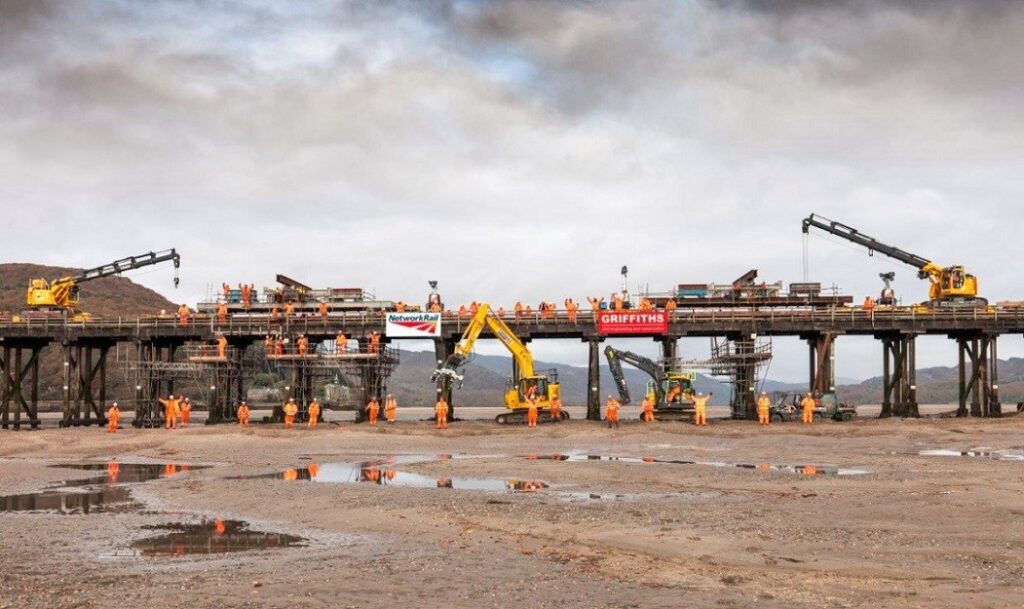
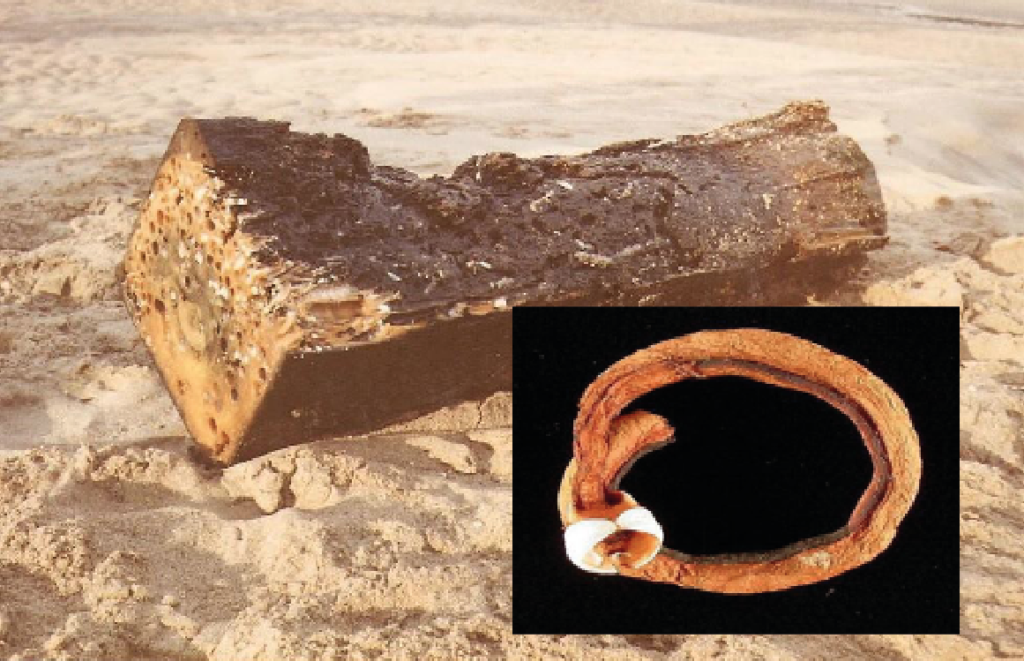
On the subject of investment, I am delighted by the work being carried out on Barmouth Viaduct in mid-Wales. The scheme to repair the listed structure is progressing well and is valued at over £30 million. I played my part, amongst others to repair it the 1980s after it was attacked by the teredo shipworm. The following picture shows the bridge, a damaged pile, and a picture of the worm!
We will be having an article on the works later this year.
AND FINALLY…
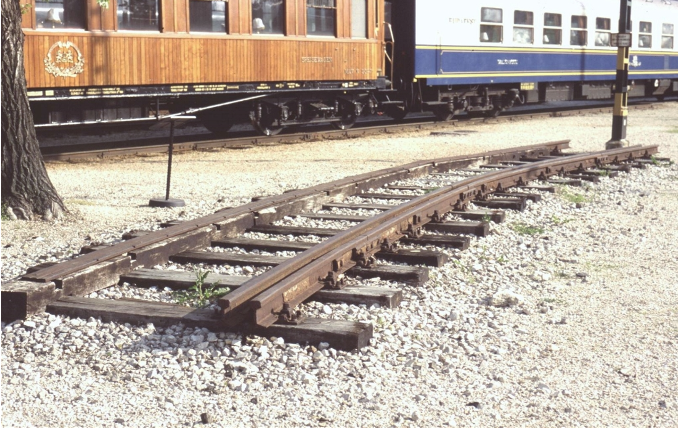
An unusual piece of track from a heritage site in Bulgaria. Can anyone explain why the left hand “rail” is a timber and a plate? See image 6.